
Advances in Mixed Characteristic Geometry
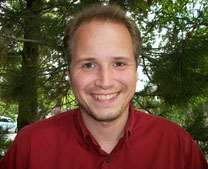 Karl Schwede, Professor in the Department of Mathematics, College of Science, along
with his colleagues, Bhargav Bhatt (Institute for Advanced Study and Princeton University),
Linquan Ma (Purdue University), Zsolt Patakfalvi (École Polytechnique Fédérale de
Lausanne), Kevin Tucker (University of Illinois Chicago), Joe Waldron (Michigan State
University), & Jakub Witaszek (Northwestern University), have been making exciting
advances in the field of algebraic geometry.
Algebraic geometry studies shapes defined by polynomial equations, such as x2 + y2 = 1, which defines a circle. One of the main projects in the subject is to classify these shapes. The minimal model program is a systematic way to do this: it simplifies complicated shapes step by step, breaks them into lower-dimensional pieces, and studies how those pieces fit together.
Algebraic geometry is often studied over number systems such as the real or complex numbers. It is also studied in the modular arithmetic setting, where numbers “wrap around” when they get too large, like hours on a clock. For example, 7 hours after 9:00 is 4:00, so we write (9 + 7 = 4) modulo 12. This modular arithmetic setting plays an important role in modern cryptography and digital communication.
Faculty at the University of Utah have made contributions to the minimal model program
before. The paper, "Extistence of minimal models for varieties of log general type," by Birkar-Cascini-Hacon-McKernan (2010) is the seminal paper on the minimal model
program in the setting of classical geometry.
Mixed characteristic is a setting that connects ordinary arithmetic with the modular arithmetic setting. It gives mathematicians a way to study how geometric objects over ordinary number systems behave when viewed modulo a prime number p. A simple way to picture the shift is to compare an equation such as x2 + y2 = z2, which defines a cone, with an equation such as p2 + y2 = z2, where p is a fixed prime number. In this second equation, one of the variables has been replaced by a prime number. This kind of replacement is typical of the mixed characteristic world.
A major difficulty is that the shapes studied in algebraic geometry often have singularities: sharp points, crossings, or other places where the shape is not smooth. A cone is a basic example, since it is smooth almost everywhere but has a singular point at its tip. Understanding such singularities is an essential part of the minimal model program.
In recent years, work of Scholze, André, Bhatt, Gabber, and others has provided new tools for studying mixed characteristic. Schwede and his coauthors used these tools to develop ways of controlling singularities in this setting. Their study of singularities culminated in the paper, "Globally +-regular varieties and the minimal model program for threefolds in mixed characteristic," which proves that the minimal model program can be carried out for three-dimensional shapes in mixed characteristic.
by Karl Schwede